Between 2004 and 2018, I was sent on hundreds of meetings with some of the best studio executives, producers, and directors in the business. I loved it. It was an opportunity to chat with like-minded people who love film, grew up with movies and were making them at the highest level. We’d discuss, ideas, plot characters (and their arcs) and who’s the audience. Maybe chat about sub-text and themes. It felt like an episode of John Favreau’s Dinner For Five. Sometimes you would end up getting work, other times you made a great connection. Everyone was intelligent, film and tv-savvy and had a deep understanding of the business side of the industry. In 2019 things started to change, and quickly.
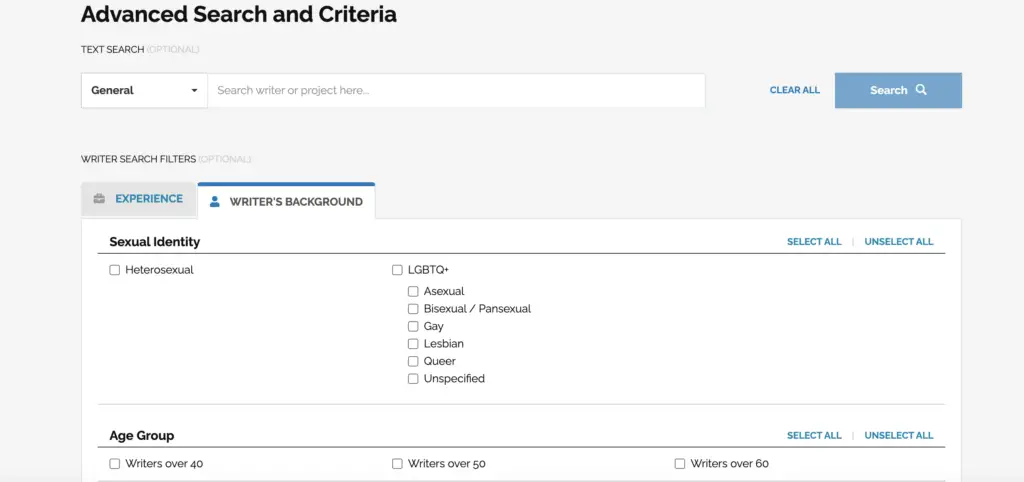
WGA Prospective Writer Search Form, Part 1
Suddenly, sub-text and themes became the main point of discussing a project or IP. The first question in every meeting became, “What can we say with this project?” or “What can we teach people with this story?” Plot, character and audience were now secondary, and sometimes not even discussed. These new execs weren’t savvy and business-minded execs; they were young, with no track record or comprehension of the bottom line. When the streaming wars started and the money hose was turned on, those experienced executives started relying on these young guns to pick up the slack. But the kids were less focused on the Hero’s Journey and more concerned with taking down the patriarchy. Which leads us to the next point. The reality is that for the past five years, white, straight, male writers and directors with experience and successful track records have been sidelined. We talk about it over coffee or after screenings: we’ve essentially been told that because of our race and gender, we need not apply. At one point my agent told me that they couldn’t put me up for any OWAs (open writing assignments) or TV staffing jobs because the execs only wanted to hear takes on the material from BIPOC or female or LGBTQ writers. Some shows even started instituting staffing quotas that 40 to 50 percent of the writing staff had to be people of color.
Continue